Ireland's Ancient East in 5 Days
Five days through Ireland's Ancient East. Newgrange, Glendalough, Kilkenny and the Rock of Cashel, with real driving times and where to stay each night.
- Days
- 5
- Distance
- 480 km
- Getting around
- Car
- Best months
- April to October
- Route
- Newgrange → Dublin
Five thousand years, forty minutes from the airport
Do not start this trip in Dublin. Collect the car, drive forty minutes north, and begin where the country does. If you want the city as well, give it its own days at the start and leave the car until you need it: Three Days in Dublin, Without a Car is built to slot in front of this one.
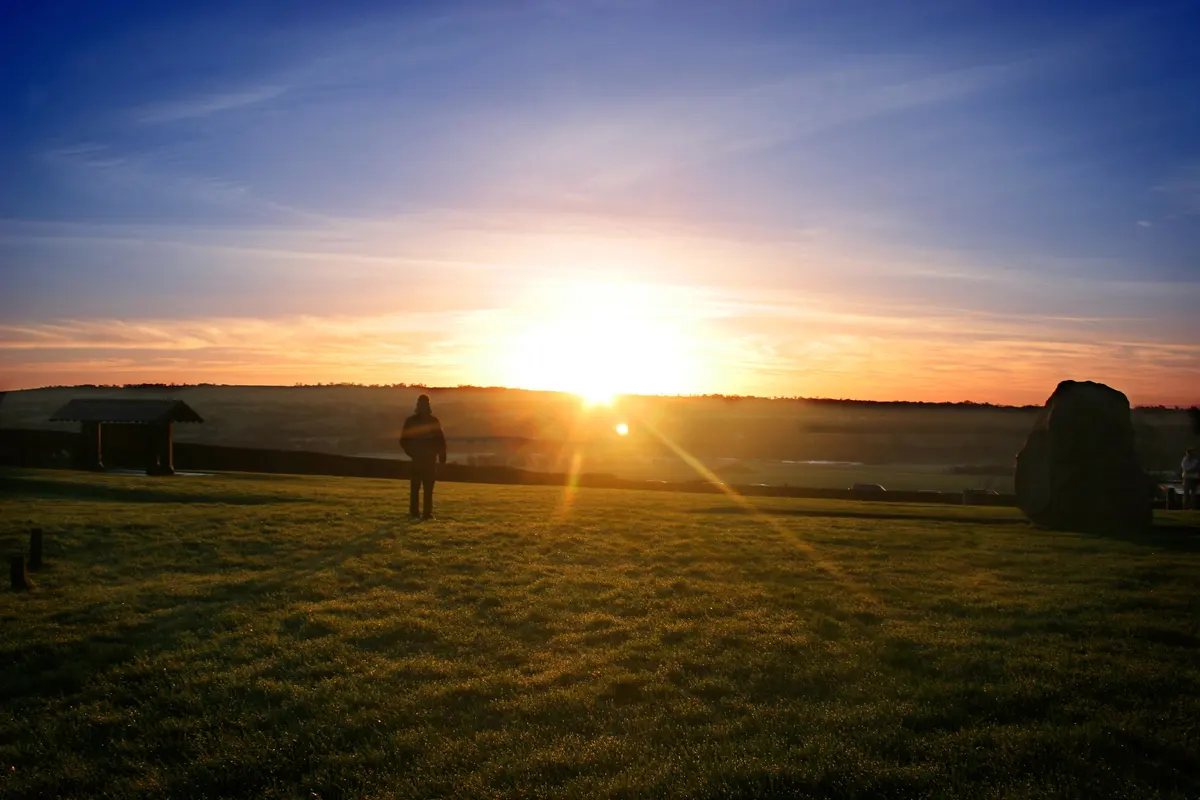
Newgrange was built around 3200 BC, five centuries before the pyramids at Giza. You walk in along a nineteen-metre passage to a corbelled chamber that has stayed watertight for 5,200 years, and for a few mornings each midwinter the rising sun runs the whole length of it. Access is by shuttle from the Brú na Bóinne visitor centre only, on a timed ticket. Add Knowth if it is offered. It holds about a quarter of all known megalithic art in Europe and gets a fraction of the visitors.
Finish on the Hill of Slane, where Patrick is said to have lit a paschal fire in defiance of the High King at Tara across the valley. It is free, it is usually empty, and the view explains the geography of the whole Boyne in one turn of the head.
Sleep in Trim, where a Norman castle the size of a village sits on the river. Mel Gibson filmed Braveheart there, which the town has never quite stopped mentioning.
On this stretch Newgrange · Hill of Slane
Over the mountains to a monastic city
Cut south around Dublin and climb straight into the Wicklow Mountains. The Military Road over the Sally Gap was built by the British in 1800 to flush rebels out of these hills, and it still feels like a road that would rather you were not on it. Blanket bog, no hedges, no houses, the occasional black lough sitting in a hollow.
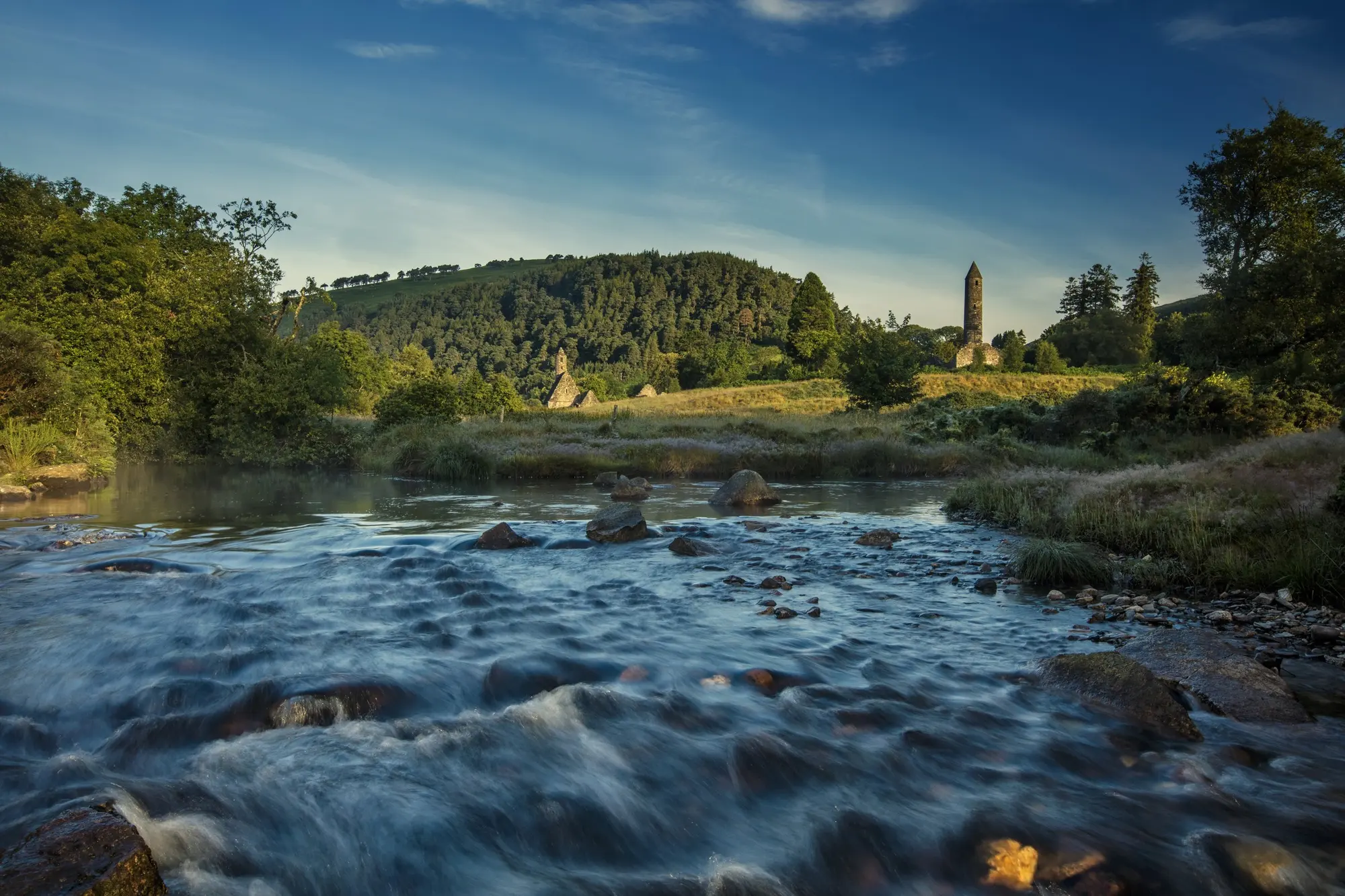
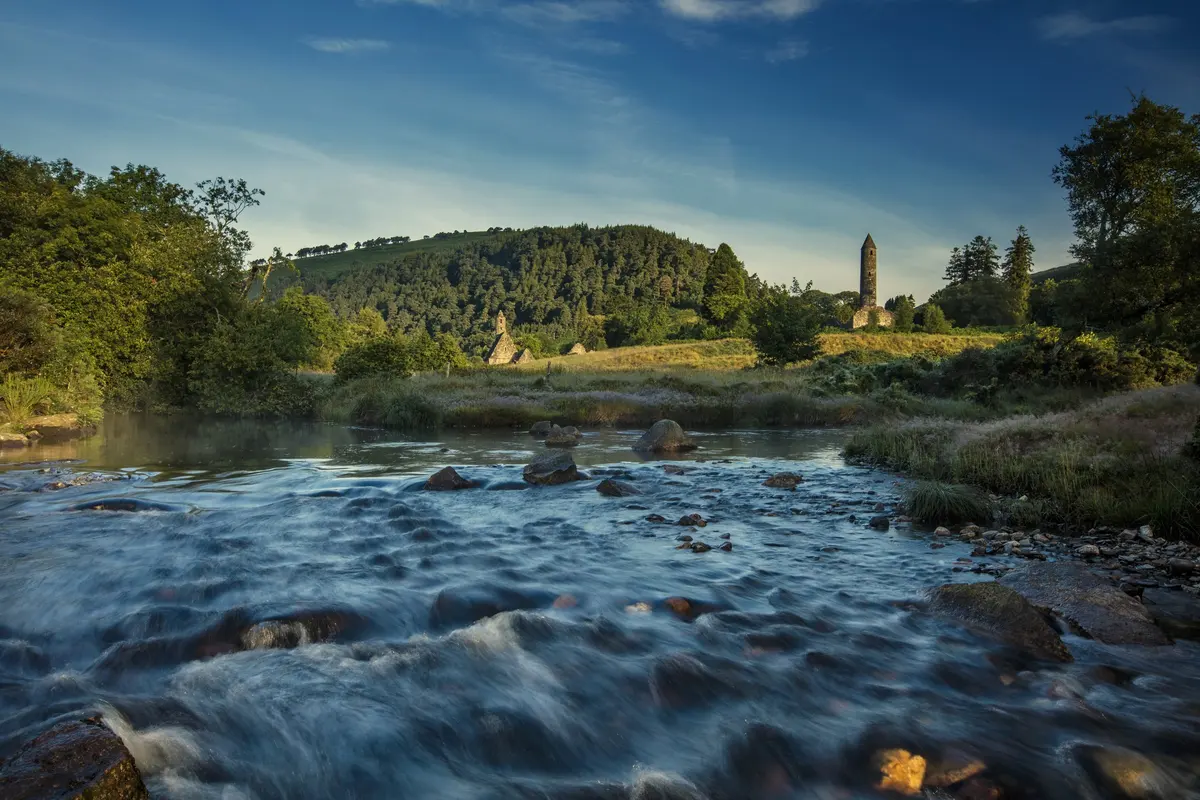
Glendalough is at the far end: a sixth-century monastic settlement in a glacial valley, with a round tower still standing thirty metres over the graveyard. Arrive before ten or after four, because the middle of the day belongs to the coaches.
Then walk. The Spinc climbs a boardwalk up the valley's south wall and looks straight down onto the Upper Lake. It takes about three hours, it is properly steep, and it is the best short walk within an hour of Dublin. The lakeside path is the flat alternative and still worth doing.
Night in Rathdrum, or push on toward Carlow if you want a shorter morning tomorrow.
On this stretch Sally Gap · Glendalough
The best small city in Ireland
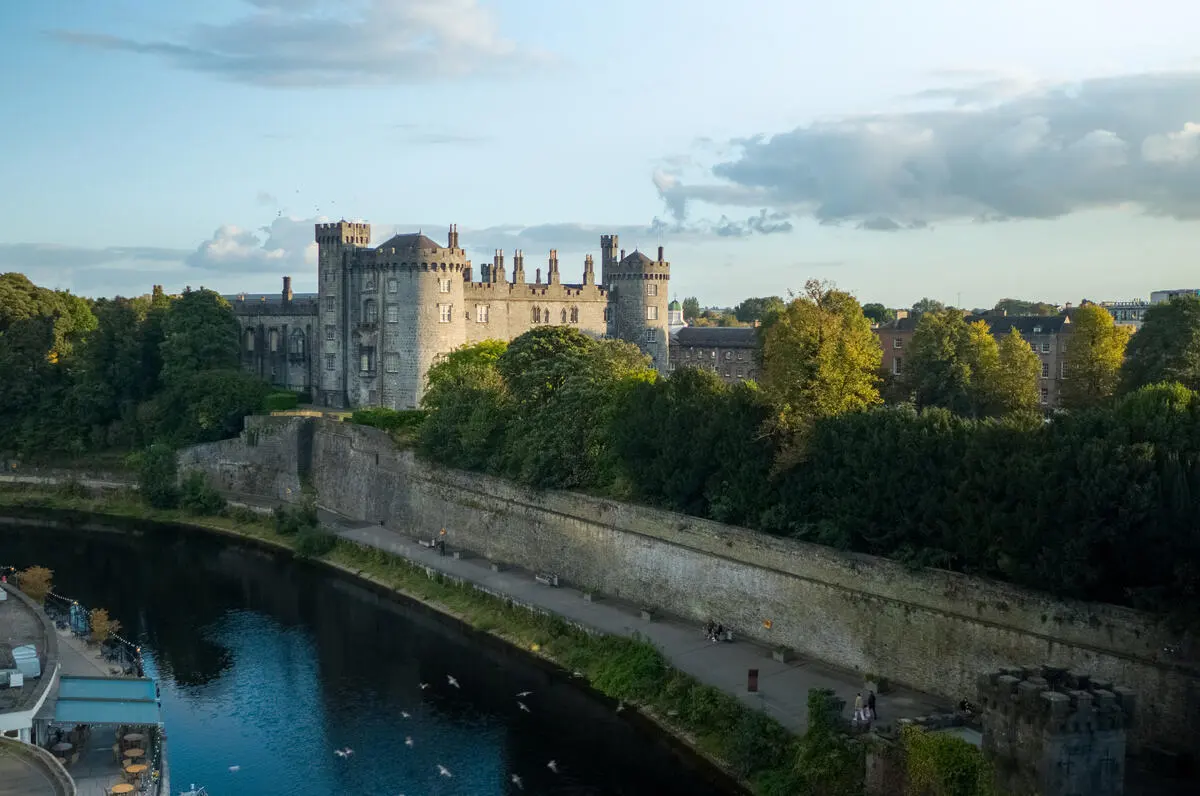
Kilkenny is medieval in a way that few Irish towns still manage. A castle at one end, a cathedral at the other, and the Medieval Mile running between them past merchant houses that have stood since the 1300s.
Do the castle, then St Canice's Cathedral, and climb its round tower if you are not claustrophobic. There is a nine-metre ladder in the dark near the top, and it is the only round tower in Ireland you are allowed up.
This is also the best eating and drinking town on the route. The Smithwick's Experience sits on the site of a brewery that ran here for three centuries, and the design studios in the castle yard are worth an hour.
With an afternoon spare, Kells Priory is twenty minutes south. It is a fortified monastery the size of a small village, with no ticket desk, no opening hours and usually nobody else in it. Most countries would have built a car park and a gift shop around it by now.
On this stretch Kilkenny Castle · Kells Priory
The rock that rules the plain
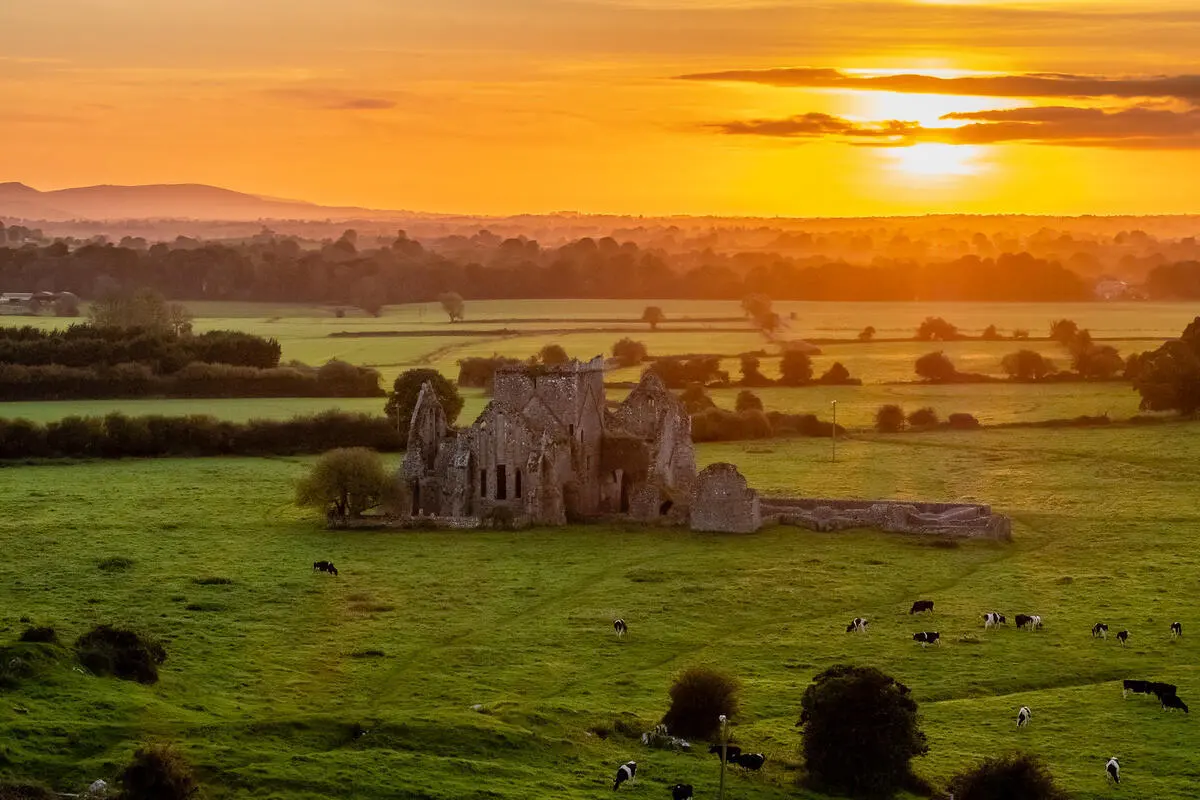
The Rock of Cashel does something no photograph of it manages. You come across flat Tipperary farmland for half an hour and then a limestone outcrop rises out of it carrying a cathedral, a round tower and a Romanesque chapel in one silhouette.
Kings of Munster ruled from here for four hundred years before handing the site to the Church in 1101. Cormac's Chapel is the part to see. The frescoes inside are the oldest in Ireland and access is by guided tour on limited numbers, so ask at the desk when you arrive rather than when you are leaving.
Below the rock, Hore Abbey sits in a field ten minutes' walk away. It is free, it is almost always empty, and it gives you the view back up that everyone else is queueing for.
On the way back to Kilkenny, Cahir Castle fits an afternoon comfortably and is the better option if the weather has turned.
On this stretch Rock of Cashel
The slow road home
Two hours on the M8 gets you back to Dublin, and that is a waste of a day. Take the R roads north through Tipperary and Laois and give yourself one last stop.
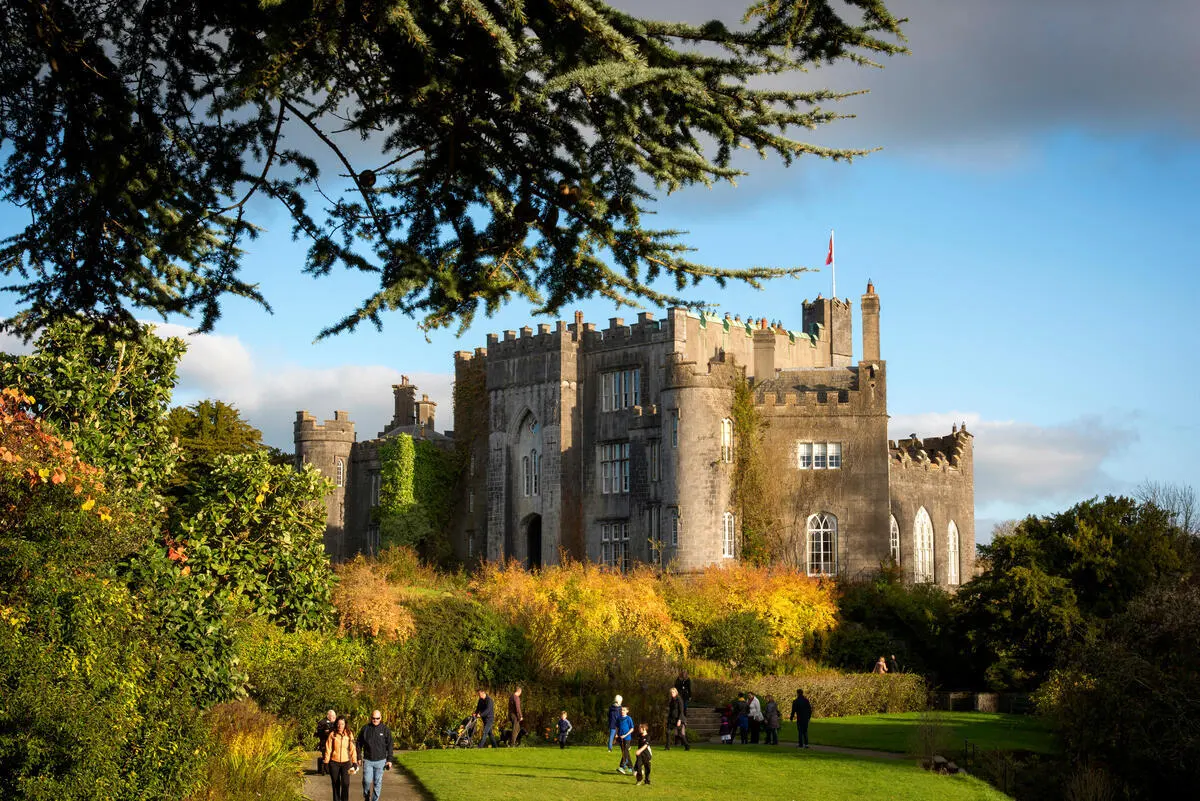
Emo Court is a Gainsborough-domed country house in beech woods with a lake walk that takes about an hour. The Rock of Dunamase is a ruined fortress on a crag ten minutes off the motorway, costs nothing and needs twenty minutes. Birr Castle is the biggest detour of the three and the most interesting: its 19th-century telescope was the largest in the world for seventy years and is still standing in the garden.
If you are flying out in the evening, Malahide or Trim make better final stops than the hotels near the airport. Both are on the north side, both have a castle, and both leave you twenty minutes from the terminal.
With seven days rather than five you can keep going west from Cashel instead of turning for home. Ireland in Seven Days takes that loop on through Cork, Kerry and Clare before returning across the midlands.
On this stretch Portlaoise · Dublin
Questions people actually ask
What is Ireland's Ancient East?
A tourism route covering the eastern and southern half of the island, the counties inland and south of Dublin, as opposed to the Wild Atlantic Way on the west coast. It is the historical half: passage tombs, monastic sites, Norman castles and medieval towns rather than cliffs and coast roads.
Can I do this without a car?
Only partly. Glendalough, Newgrange and Kilkenny are all reachable by day tour or train from Dublin, but Cashel, Kells Priory and the Sally Gap are not realistic on public transport. If you are not driving, base yourself in Dublin and take three separate day trips instead of this loop.
Is five days enough?
For this loop, yes. Five days covers the four headline sites with no day of more than about three hours' driving. If you have seven, add Waterford and the Copper Coast in the south-east rather than stretching these five days thinner.
Which is better, Ancient East or the Wild Atlantic Way?
They are different trips. The west is landscape: cliffs, peninsulas, big weather. The Ancient East is history you can walk into, with easier driving, more shelter when it rains and far smaller crowds. If it is your first visit and you only have a week, take the west. On a second visit, or travelling outside summer, take this one.
Do I need to book Newgrange in advance?
From April to September, yes. Access is only by timed shuttle from the visitor centre and tickets go early in summer. Out of season you can usually walk up on the day, though the chamber tours still run on limited numbers.
Last checked